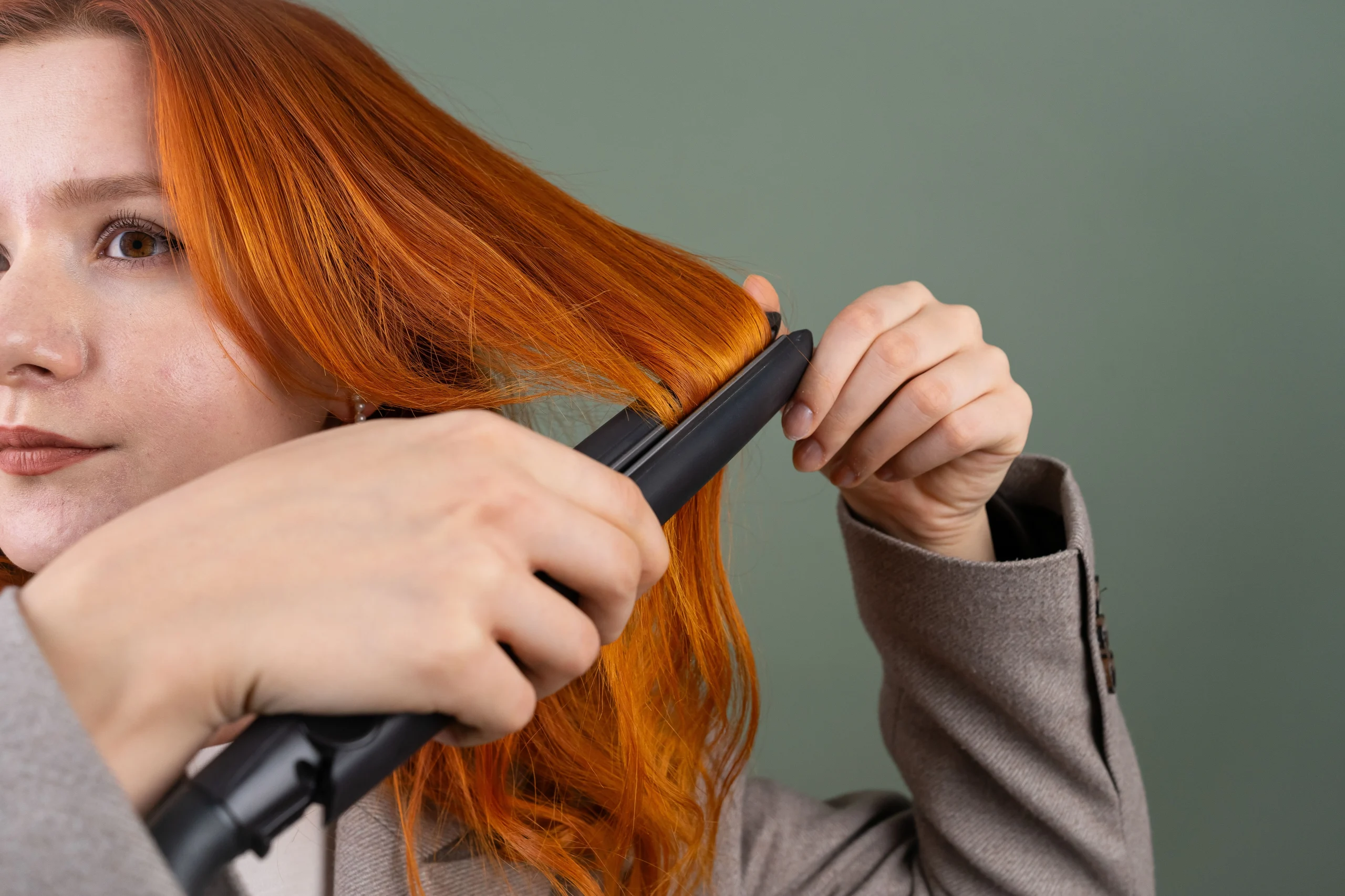
Straighteners and curlers can transform your hair in minutes. But used the wrong way, they can also undo months of good hair days in a single pass. If you’ve ever pulled the plates through your hair and felt that dry, straw-like texture afterwards, you’ve already met heat damage first-hand.
The good news is that most heat damaged hair is preventable. In this guide, we’ll explain what actually happens to your hair under heat, how to spot the early signs, and exactly what to apply before you style, so your straighteners work with your hair instead of against it.
Hair is mostly made of a protein called keratin. Heat can break that protein down, in the same way heat changes an egg when you fry it. Once that structure breaks, it doesn’t rebuild itself. That’s why heat damaged hair feels different, rougher, drier, and less elastic than healthy hair.
This raises a fair question: is hair drying bad for your hair? Not necessarily. A hair dryer used on a moderate setting, kept moving, causes far less damage than a flat iron. The real risk comes from direct, sustained heat, exactly what a straightener applies. Wet hair is especially vulnerable. According to hair fibre research, keratin can start to break down at much lower temperatures when hair is still damp, one of the biggest reasons straightening wet or semi-dry hair causes so much more damage than styling it fully dry.
If you’re already dealing with damage, you’re probably searching for how to fix heat damaged hair right now. Here’s the honest answer: you can’t fully undo it, but you can dramatically improve how it looks and feels.
True repair heat damaged hair strategies focus on two things. First, sealing the outer cuticle so it reflects light and feels smoother. Second, replacing lost moisture so hair feels softer and behaves better. If you’re wondering how to repair heat damaged hair specifically, a weekly hair mask is one of the most effective steps. Our Signature Hair Mask, made with organic shea butter and argan oil, works to restore moisture, strength, and shine to hair that’s taken heat damage.
If your hair has also been through bleach damaged hair processes, treat it with extra care. Bleached hair has already lost some of its internal protein structure, so heat styling on top of colour treatment compounds the damage fast. Lower your tool’s temperature and increase your use of protective, hydrating products if your hair is both coloured and regularly heat styled.
Catching damage early means you can adjust your routine before it gets worse. Here are the signs to watch for:
| Sign | What It Means |
| Straw-like texture, even right after washing | Protein in the cuticle has broken down from repeated heat exposure |
| Split ends that reappear weeks after a trim | Heat has weakened the hair shaft itself, not just the tips |
| Hair feels fine but won’t hold curl or straighten smoothly | The internal structure has lost elasticity |
| A dry, brittle patch near the front hairline | Likely from repeated close contact with a straightener or wand |
| Extra frizz that shows up specifically after heat styling | A sign the cuticle isn’t sealing properly, often from missing heat protection |
The single biggest mistake people make is reaching for the straightener before thinking about heat protection at all. A good rule to remember: never apply direct heat to hair without something between the tool and the strand first.
Whether you call it a hair protector for heat, a heat protecter (a common way people spell it when searching), or simple protection heat, the function is the same. It coats the hair shaft, cuts down direct contact with the heat source, and helps lock in moisture that would otherwise evaporate under high temperatures. Proper hair heat protection isn’t an optional extra step, it’s the difference between styling hair and slowly damaging it.
Search for heat protection for hair and you’ll find two main formats: sprays and creams. Both work, but they suit different hair types and different styling tools.
A heat protector spray or heat protection spray for hair works best for fine or fast-drying hair, since it’s lightweight and won’t weigh strands down. If you’re comparing a hair heat protection spray against a cream, or looking for a hair heat protector specifically for curling wands, spray formats tend to distribute more evenly across sections. Our Illuminating Potion, enriched with prickly pear and geranium oil, is built to nourish hair, tame frizz, and protect against heat styling in one lightweight step.
For thicker or drier hair, a cream-based heat protectant or heat protector often performs better, since it coats each strand more heavily. If you’ve searched for a heat defence spray, dry hair heat protector, or a general heat protector for hair with more slip, our Signature Blow Dry Cream is formulated with marula oil to smooth frizz, add shine, and protect hair from heat and humidity before you dry or style.
Whichever format you choose, a heat protectant for hair only works if it’s applied properly. Whether you’re using a hair protectant spray from heat, a spray on heat protectant for hair, or one of many heat protectants on the market, the rule is the same: apply to damp or dry hair before any heat tool touches it, section by section, so no strand gets missed. A quick spray heat pass over the surface only isn’t enough, work it through from root to tip.
A hair straightner (a common spelling of “straightener”) is one of the most damaging tools in daily use, simply because it holds direct, sustained heat against the hair for several seconds per pass. A straightener set too hot for your hair type is the fastest route to permanent damage.
Heat protection is one part of the picture. If you’re asking how can I keep my hair healthy overall, or searching how to keep my hair healthy long-term, the answer is a full routine, not a single product.
People often ask how do you keep your hair healthy with regular heat styling, and the honest answer is balance: protect before every heat session, hydrate consistently between washes, and give hair a proper treatment at least once a week. If you’re researching how to keep your hair healthy specifically alongside frequent styling, that weekly step matters most, it’s where most of the repair happens.
Good hair care isn’t about buying more products, it’s about using the right ones in the right order. The best care products for hair work together: a gentle shampoo and conditioner, a weekly hydrating mask, and a heat protectant before styling. If you’re comparing hair care products UK wide, explore the full HEHR range to build a complete routine around your hair type and styling habits.
If you’re in Doncaster or South Yorkshire, heat damage often has a hidden helper: hard water. Mineral build-up from the region’s notably hard water, confirmed by Yorkshire Water, already leaves hair slightly more dehydrated before you even reach for a straightener. That means heat protection matters even more here than in softer water areas. HEHR is formulated and based right in Dunromin, Doncaster, with this exact combination of hard water and everyday heat styling in mind. We cover the hard water side of things in more depth in our previous post on ingredients that make hard water damage worse, worth reading alongside this one.
Can heat damaged hair be fully repaired?
Not fully. Once keratin protein breaks down, it can’t rebuild itself. But consistent hydration and protein-rich treatments can dramatically improve how damaged hair looks and feels.
Is a heat protectant spray or cream better?
It depends on your hair type. Sprays suit fine or fast-drying hair. Creams suit thicker or drier hair that needs a heavier coating.
Do I need heat protectant for blow-drying, or just straightening?
Both. Blow-drying is generally gentler than straightening, but sustained heat from any tool can still cause damage without protection.
How often should I use a hair mask if I style with heat regularly?
Once a week is a good baseline. If you style with heat most days, some hair types benefit from twice a week.
Straighteners and curlers aren’t the enemy, unprotected heat is. Apply the right protectant every time, choose a sensible temperature, and support your hair with regular hydration between styles. Shop the full HEHR Collection to build your heat-safe routine.
